Embedded ML · Project founder · Aug 2024 – Jun 2025
An ML Sudoku Solver Built on a Microcontroller Camera
The goal: point a camera at a Sudoku and get it solved. That means running digit recognition on a microcontroller-class device, then handing the grid to a solver. I founded the project in Chang Gung University's Intelligent Control Lab: I built the rig, trained and deployed the models, and wrote an original solving algorithm that finishes in under 0.2 seconds.
Read the engineering notebook (PDF) →- Single-digit F1
- ~94%
- Hardware
- AI Thinker ESP32-CAM
- ML tooling
- Edge Impulse → Python
- Solver speed
- < 0.2 s per puzzle
Try the solver
This is the solver half of the project, running live: backtracking that always fills the most constrained cell first. Pick Hard to watch it guess, hit a dead end (orange) and back up.
placements 0 · backtracks 0
Hardware rig
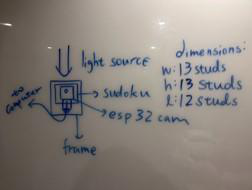
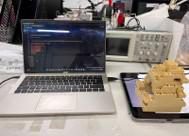
I built the enclosure from LEGO so I could change the camera height and angle quickly and measure them exactly. Both had to stay fixed for the model to work. An iPad underneath acts as a backlit input surface for sharper digit contrast, and side openings keep the ESP32-CAM's reset button reachable when switching firmware. The camera streams over Wi-Fi from Arduino IDE, and I tuned its angle, zoom and lighting.
Three stages of the model
Stage 1
Single-digit transfer learning
Trained an Edge Impulse transfer-learning model on MNIST handwritten digits. I tuned dataset size, training cycles, learning rate and batch size until it reached about 94% F1 without over- or underfitting, then deployed it as an Arduino library running on the ESP32-CAM, predicting every 7–8 seconds. Testing showed how much accuracy depends on digit size, stroke weight and screen brightness.
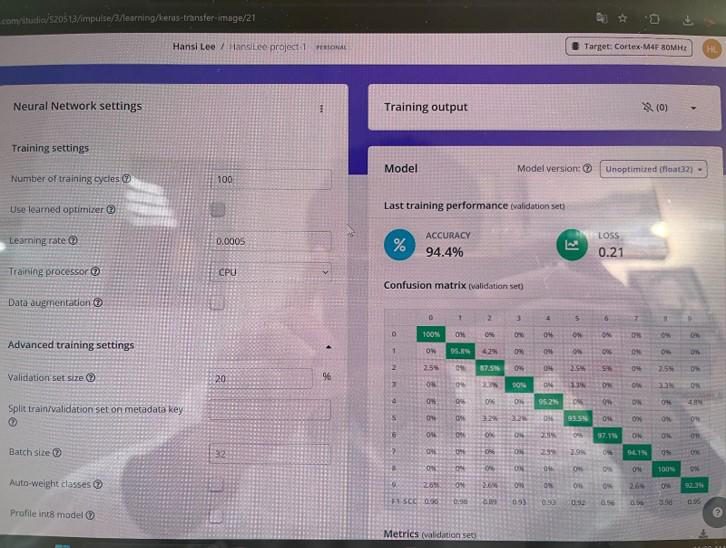
Edge Impulse training run for the single-digit classifier. Stage 2
Whole-grid object detection
To read the whole grid at once, I moved to an object-detection model that outputs each digit's class, confidence, position and size. Labeling every training image by hand was the bottleneck, so I used generative AI tools to speed it up. Accuracy fell well short of the single-digit model, limited by the more complex task and the free tier's training budget.
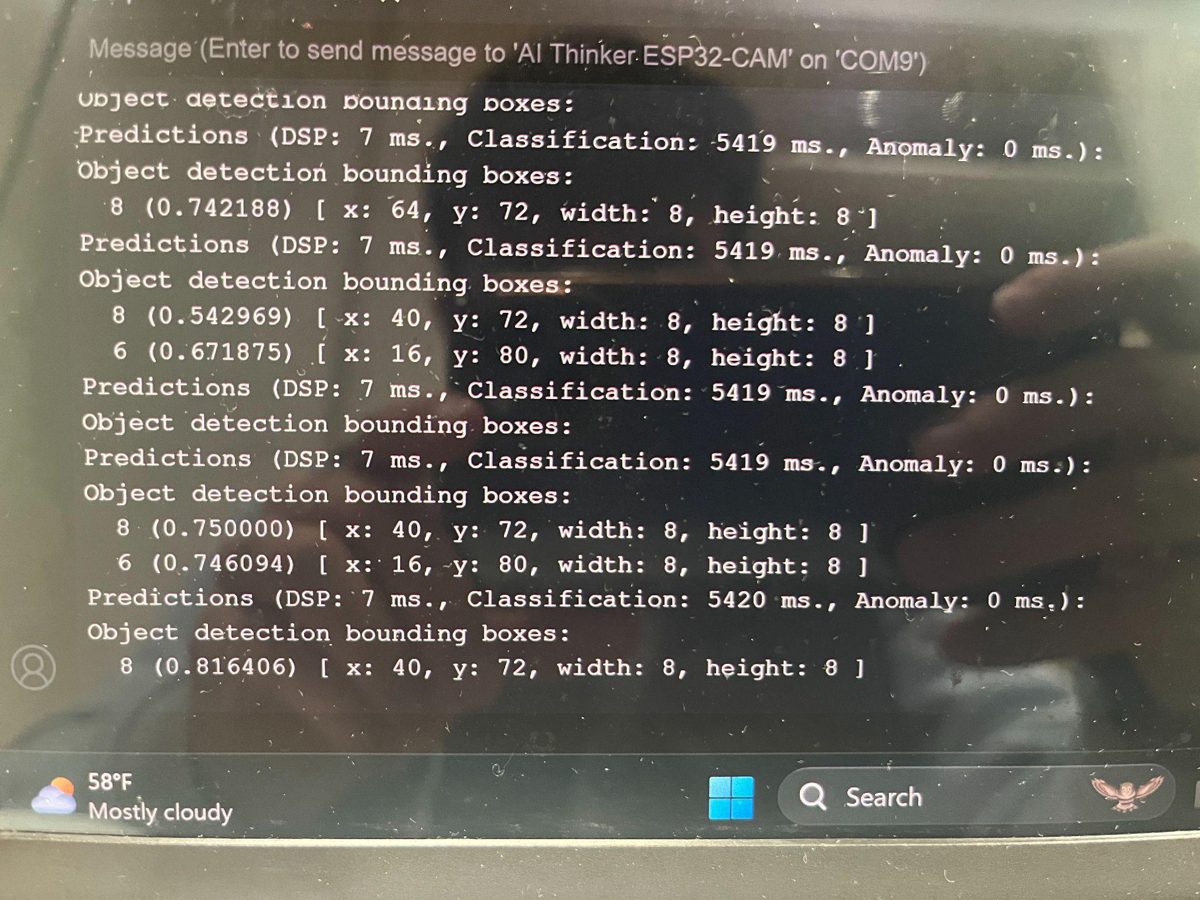
Object-detection output: label, confidence and bounding box per digit. Stage 3
Moving recognition into Python
Working with students in the lab, I rebuilt recognition in Python so it could merge directly with my Python Sudoku solver. The current version reads a 3×3 grid and checks it against Sudoku rules. That's a narrower task, chosen on purpose to get the whole pipeline working end to end before scaling up.
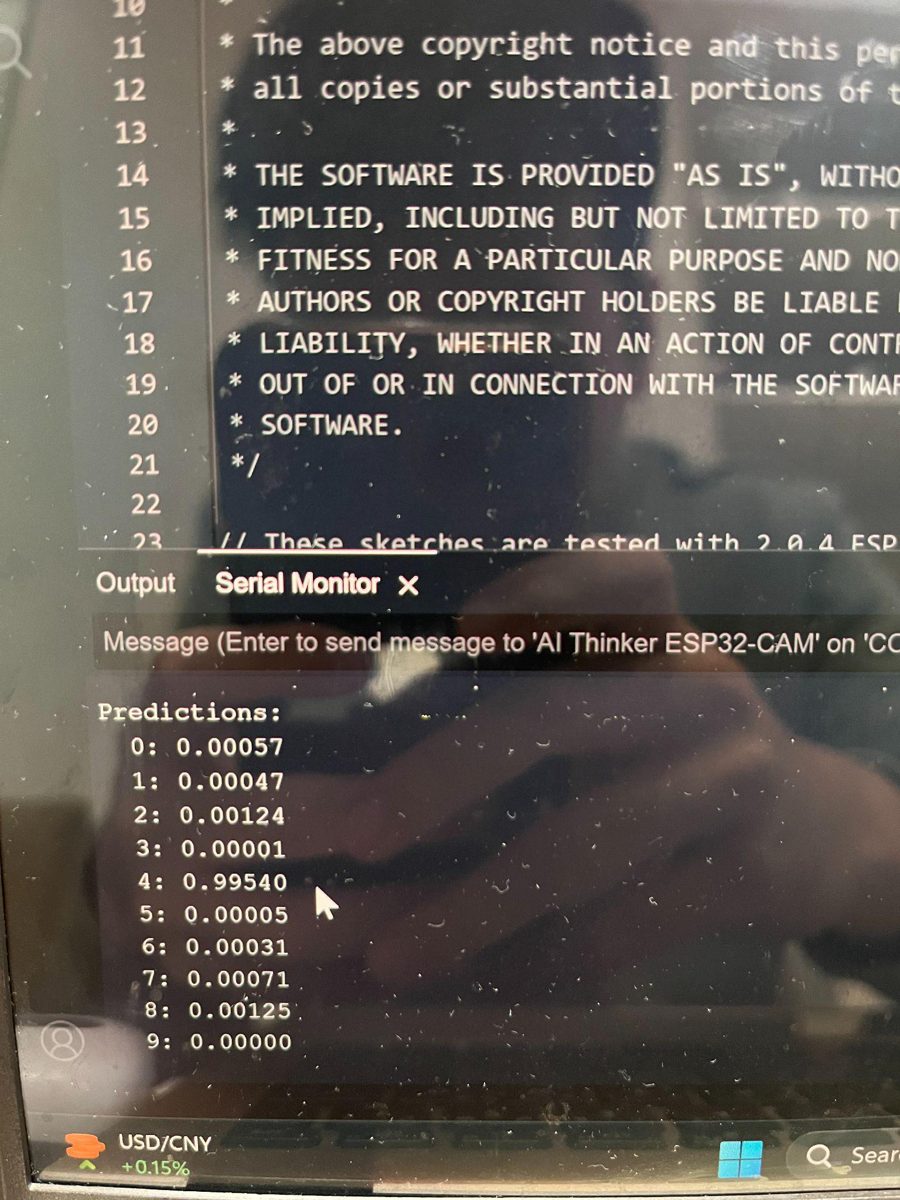
Per-digit probabilities streamed from the on-device model.
Takeaways & next steps
- On-device ML is limited by data conditions (lighting, scale, contrast) as much as by model choice.
- When a tool's ceiling became the bottleneck, I changed the toolchain instead of over-tuning.
- Next: train a stronger recognizer in Python with more data, scale from 3×3 to the full 9×9 grid, and harden the rig for everyday users.